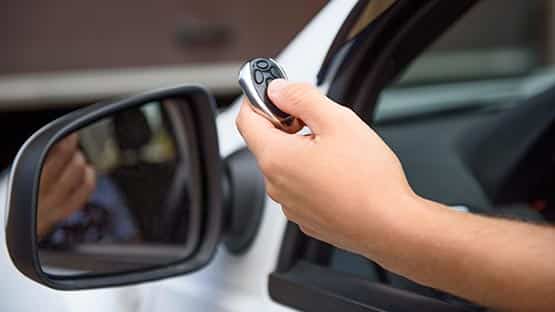
Why does the garage door opener quit after a storm when the lights never even blinked? The outage didn’t kill it. A voltage spike rode in on the wiring while the rest of the house barely noticed, and the opener’s low-voltage logic board happens to be among the most exposed, least-protected electronics in a typical home.
The remote still clicks. The wall button still lights. Nothing moves. From here, every choice you make has trade-offs, whether you repair, replace, or protect. The sections below walk through the decisions one at a time.
Decide whether the opener was actually surged
Before you spend a dollar, figure out what you’re looking at. A storm-killed opener usually shows one of a few tells: no response from the wall button, a dead LED on the logic board, a faint burnt-plastic smell near the motor head, or a unit that hums but won’t engage. If the breaker is fine and other outlets on the same circuit work, the problem is likely inside the opener itself.
You don’t need a direct hit on the house for any of this to happen. Nearby lightning is far more likely to cause equipment damage than a direct strike, because the surge travels in through utility lines, cable, phone, even buried irrigation wire.
The opener sits at the end of a long antenna of household wiring, with a small transformer and a sensitive board on the other side. It gets hit first and hardest.
Choose between repair and replacement
Once you know the opener took a hit, the real question is whether to fix the board or swap the whole unit. The honest answer depends on the age of the opener and what else got cooked.
- Logic board only for a unit under 7 years old. A board swap usually makes sense. The motor, rail, and safety sensors are fine, and a new board brings the opener back to spec. A qualified technician can source the part and test the safety reverse in the same visit. This is the lane where professional opener repair earns its keep.
- Board plus motor or capacitor. Once a surge takes out two components, the math shifts. Parts, labor, and a second service call often approach the cost of a new unit with a warranty.
- Unit over 10 years old. Replace it. Older openers predate current safety and standby-power requirements, and parts availability drops off a cliff. A new DC-motor opener with battery backup runs quieter, pulls less power, and is far easier to protect going forward.
- Smart features fried, mechanics fine. If only the Wi-Fi module is dead, you can often keep operating the opener manually with the wall button and remote while you decide.
Pick a surge protection strategy that actually reaches the opener
A power strip under the TV does nothing for a motor bolted to the ceiling of the garage. Real protection has to sit between the opener and the paths a surge can travel, which means thinking in layers.
- Whole-house SPD at the panel. A service-entrance surge protective device clamps the big transients before they fan out into branch circuits. Current electrical code requires one on new and replacement residential services in most jurisdictions, and retrofitting an existing panel is a straightforward job for a licensed electrician.
- Point-of-use protector at the opener. The ceiling outlet feeding the opener should have its own surge-rated receptacle, or a plug-in protector with a joule rating meant for motors rather than consumer electronics. This is the layer most homes skip.
- Unplug during named storms. Low-tech and underrated. If a severe storm is bearing down and you’ll be home, pulling the opener’s plug costs nothing and defeats the surge path entirely.
- Mind the restoration spike. A meaningful share of surge damage happens not during the outage but at the moment power returns, when voltage can briefly overshoot before stabilizing. Guidance from NIST suggests that if the lights go out in a storm, flipping the opener’s breaker off until power is steady is a fair precaution.
Worth remembering: surges don’t just come from the sky. A large share originate inside the home every time a motor-driven appliance cycles, which is why a layered approach beats trusting any single device.
Decide what you’ll do the next time the power flickers
The opener you just lost is a prompt, not a verdict on the brand. Whatever you install next will face the same wiring, the same utility feed, and the same weather. The decisions that matter most get made before the next storm hits: a panel-level protector, a dedicated plug-in protector at the motor, a note to kill the breaker when the sky turns, and a willingness to replace an aging unit on your timeline rather than during a late-night service call.
A garage door opener is among the most-used motors in the house and one of the least-protected. Fix that once, and the next storm becomes a flicker in the lights instead of a costly morning.
This content is provided for informational purposes only and is not a substitute for professional advice. AFP editorial staff were not involved in the creation of this content.



 Share