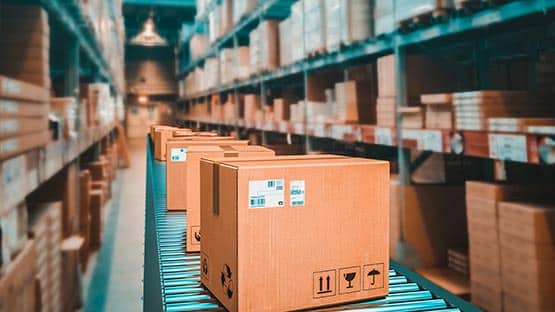
Modern industrial activities are under continuous pressure to transport goods more quickly, eliminate manual labor, and maintain stable productivity without increasing operational expenses. Delays, product damage, and safety risks soon follow when systems fail to keep up, impacting overall efficiency and profitability.
Simultaneously, companies need to respond to the changing needs of production, which demand flexible and dependable material-handling solutions. This is where conveyor systems come in handy, providing a simplified way to move goods across various production phases. Among these systems, belt-based solutions stand out for their versatility and efficiency.
They streamline the workflow and provide accuracy and control over movement. This article examines the role of belt conveyors in supporting contemporary industrial processes and why they continue to play a fundamental part in enabling scalable, efficient, and reliable operations worldwide.
1. Improving material handling processes
Firstly, effective material management is the core of any industrial establishment. Implementing belt conveyors in your operations allows you to dramatically reduce manual moving activities and improve speed and precision. These systems enable goods to move continuously along production lines rather than relying on labor-intensive approaches.
Additionally, this standardization reduces interruptions and ensures that every production process gets materials on schedule. Consequently, operations are smoother and more predictable.
Moreover, the risk of damaged products is reduced because of handling, which is particularly vital in industries that require delicate or expensive products. As a result, these businesses are able to sustain quality and efficiency without undue pressure on resources.
2. Enhancing productivity and throughput
Besides simplifying processes, conveyor systems directly increase productivity. Given that materials flow continuously, production lines are less prone to bottlenecks and delays. This results in significant growth in throughput over time.
Moreover, the automated movement enables workers to devote more time to more important activities than wasting time on repetitive handling. This not only increases efficiency but also increases the overall workforce utilization.
This is essential as the scale of operations increases, making the capacity to deliver constant output vital. Hence, when investing in trusted conveyor solutions, you can be sure your production capacity will not be affected, nor will performance or control.
3. Enabling scalable and flexible operations
Flexibility is another important benefit. Contemporary industrial settings tend to require systems that are flexible enough to accommodate evolving layouts and production requirements. Belt conveyors can accommodate these variations and are therefore used in a variety of applications.
For example, during an expansion of your facility or a change to an existing line, these systems can be adjusted to accommodate it. They are also easily integrated with other equipment due to their modular nature.
This enables businesses to scale operations without significant disruptions. It is this flexibility that makes your infrastructure future-proof and able to handle today’s demands and tomorrow’s challenges.
4. Improving workplace safety
No less significant is the effect on workplace safety. When it comes to handling heavy or repetitive loads, manual handling is likely to result in fatigue and injuries. Conveyor systems also minimize physical human activity in potentially dangerous activities because they automate transportation.
In addition, controlled movement guarantees that the materials are carried in a predictable and stable fashion. This reduces the number of accidents as a result of unforeseen falls or mishandling.
Moreover, it provides a safer working environment with organized workflows that minimize clutter and unnecessary movements throughout the working area. As a result, workers will be able to work more comfortably and with confidence, which, in the end, will lead to increased productivity and morale.
5. Energy and cost control features
Belt conveyors not only enhance performance but also help control operational costs. They use less energy and produce more predictable outcomes than other material-handling processes. Subsequently, they are economical to use in the long term.
Conversely, reduced manual work will mean lower manpower needed to perform monotonous tasks. Maintenance is also not difficult, especially when systems are developed with long lifecycles in mind.
All these factors will contribute to significant savings in the long run. In this way, companies are able to achieve efficiency in their operations and sustainability in their finances, without having to compromise quality or output.
6. Maintaining precision and product integrity
Finally, precision plays a crucial role in modern industrial operations. Conveyor systems provide controlled and uniform movement, which is essential for maintaining product integrity. Whether transporting components in manufacturing or packaged goods in distribution, consistency is key.
Additionally, smooth operation reduces vibrations and sudden impacts, protecting products from damage.
This is particularly valuable in industries where accuracy and quality standards are non-negotiable. As a result, businesses can ensure that products reach their destination in optimal condition, reinforcing reliability and customer satisfaction.
Final thoughts
In conclusion, belt conveyors have become an indispensable part of modern industrial operations due to their ability to enhance efficiency, safety, and scalability. They streamline material handling, improve productivity, and provide the flexibility needed to adapt to changing demands.
At the same time, they contribute to safer workplaces and better cost management, making them a practical investment for long-term success. As industries continue to evolve, the need for reliable and efficient systems will only grow stronger.
By integrating well-designed conveyor solutions into your operations, you position your business to meet future challenges with confidence, consistency, and improved operational control.
This content is provided for informational purposes only and is not a substitute for professional advice. AFP editorial staff were not involved in the creation of this content.


 Share
Share