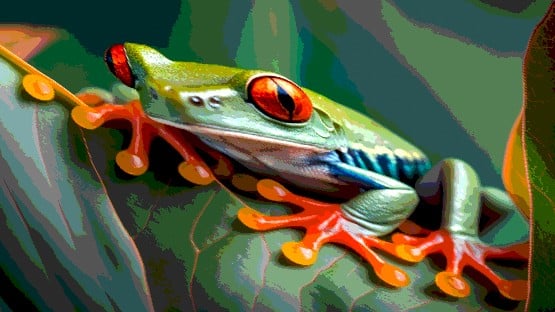
Dear EarthTalk: How are amphibians doing in the U.S. and around the world these days? – D. Victor, Philadelphia, PA
Amphibians, such as frogs, toads, salamanders and newts, live on both land and in water. Having emerged over 300 million years ago, today there are over 7,000 known species. However, they are perishing at an alarming rate. In 2004, about a third of amphibian species were threatened by extinction. Scientists have calculated that amphibian populations are decreasing at an annual rate of 3.79 percent in the U.S. alone.
Amphibians are crucial for ecosystem viability. They improve biodiversity and resilience in aquatic and terrestrial ecosystems by transferring energy and organic matter. Certain amphibians eat decomposers, allowing soil to retain nutrients longer. Tadpoles feed on algae, slowing algal blooms and subsequent eutrophication. Lizards, birds, fish and snakes rely on amphibians as a source of food. Certainly, the disappearance of amphibians will have serious repercussions throughout a wide range of ecosystems.
Amphibians typically have highly permeable skin that helps them breathe. Oxygen molecules dissolve into the skin’s mucus membrane and surface blood vessels. Since their skin is so permeable, amphibians are very sensitive to their surroundings. As such they are considered an “indicator species” because they react so quickly when environmental factors change and can signal trouble for the wider environment.
There are many reasons why amphibian populations are declining, many of which are human-related. When people build roads and dams, amphibians may be separated from other members of their species. The infrastructure also interrupts migrating patterns and the flow of larvae in water. Water retention in rivers, streams and ponds is declining and shorelines are receding. Additionally, people exploit amphibians as pets or ingredients in medicinal/biological markets.
Many amphibians lay eggs in water, and toxins like road salts, pesticides, fertilizers, industrial wastes and plastics can penetrate the eggs’ membranes and poison the developing larvae. Pollutants can also cause behavioral irregularities, lower reproductive success, and even cause death. Moreover, ozone layer erosion has let more of the sun’s ultraviolet rays infiltrate the atmosphere. UV-B rays can kill amphibians directly and cause growth delays and immune dysfunction. These changes result in the mass mortality of eggs, larvae, and metamorphosizing amphibians.
Since the mid-1900s, there has been a pandemic of the infectious chytrid fungus in over 700 amphibian species. The fungal spores move through water and stick in soil. When amphibians (notably frogs) come in contact with this fungus, it degrades the keratin layer of their skin, causing skin sloughing, lethargy, weight loss and death. Scientists are still exploring efficient ways to slow the spread of this lethal fungus.
Everyone can play a part in helping amphibians, from keeping pets indoors, reducing fertilizer and pesticide usage, covering your pool when not in use (to save amphibians from falling in). These are some of many ways that you can do your part to help these endangered critters out!
CONTACTS: Why are amphibian populations declining? usgs.gov/faqs/why-are-amphibian-populations-declining; Water Quality and Amphibians, conservewildlifenj.org/blog/2015/03/27/water-quality-and-amphibians/; What Amphibians Can Tell Us About Water Quality, cnr.ncsu.edu/news/2023/04/amphibians-water-quality/; What You Can Do, nps.gov/subjects/amphibiansandreptiles/what-you-can-do.htm.
EarthTalk® is produced by Roddy Scheer & Doug Moss for the 501(c)3 nonprofit EarthTalk. See more at emagazine.com. To donate, visit earthtalk.org. Send questions to: [email protected].

 Share
Share