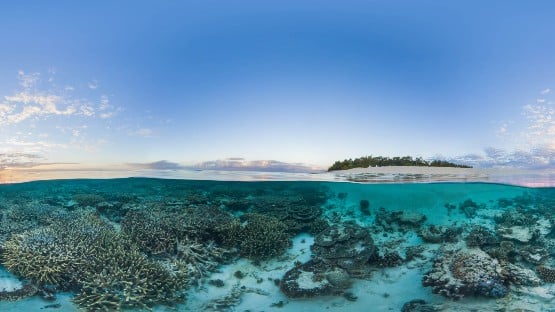
Dear EarthTalk: What can we do to save dying coral reefs? – B.H. Jackson, Tullahoma, TN
Coral reefs around the world are indeed still at great risk. A comprehensive survey by Canadian researchers in 2021 shows that the world’s oceans have lost about half of their coral cover since the 1950s. The non-profit Global Coral Reef Monitoring Network reports that upwards of 14 percent of the world’s coral reefs perished in just the last decade.
What’s killing our corals? The main stressor is global warming-induced rising sea temperatures. Most coral tolerates a range of 75 to 85 degrees Fahrenheit, and temperatures far above that limit are recorded regularly at various locations around the globe. Other climate-related stressors include the fossil fuel-driven acidification of oceans and more frequent, intense tropical storms. Meanwhile, our irresponsible use of coastal lands and the preponderance of ocean-bound pollution that comes off them, as well as overfishing that decimates marine ecosystems, aren’t helping.
The combined effect of these stressors is so-called coral bleaching. Healthy reefs have a symbiotic relationship with an algae called zooxanthellae that lives within coral tissues. Zooxanthellae is coral’s primary food source, but also saturates the structure of the coral that it uses for protection with color—typically a light golden brown, but patches of red, green or blue aren’t unusual.
When coral is stressed due to high water temperatures or other factors, it expels the zooxanthellae, its main nutrient source. As the color fades away, the remaining coral structure turns white. While this bleached coral isn’t dead, it is in a weakened state more likely to be affected by disease or infection. If environmental conditions improve and the coral is re-inhabited by zooxanthellae, its color can return.
New research is providing a glimmer of hope. A recent study of how heat affects marine ecosystems off the Panama coast shows that some corals there have been able to “shuffle” out one species of zooxanthellae for others more resilient to high water temperatures. But while such findings should be celebrated, we’re still causing too much warming too fast to think nature can repair our damage on its own. Marine biologists say corals could be entirely gone by 2050 without substantive human intervention.
Whether or not you live near the ocean, there are many ways you can help coral. For one, seek seafood that is harvested sustainably, as such fisheries prioritize the safety of the marine environment, using methods that minimize impact and help water ecosystems everywhere (including coral reefs). Another way to be part of the solution is by using so-called “reef-safe” sunscreen. Many mainstream sunscreen products contain oxybenzone, a common UV-blocking chemical. But oxybenzone is toxic to corals and as such exacerbates any bleaching and erosion already underway. A quick scan of the ingredient label on a sunscreen bottle before making a purchase is a small but vital act that promotes coral health. Indeed, any way you can significantly reduce your carbon footprint (less driving, flying, red meat, etc.) helps coral survive by reducing greenhouse gas emissions. If we don’t act fast on global warming, our grandkids may never get to see the colorful corals every previous generation of humans has been able to appreciate.
CONTACTS: Why Are Coral Reefs Dying, unep.org/news-and-stories/story/why-are-coral-reefs-dying; NOAA’s Coral Reef Conservation Program, coralreef.noaa.gov; Bloomberg Ocean Initiative, bloomberg.org/environment/protecting-the-oceans/bloomberg-ocean/coral-conservation/.
EarthTalk® is produced by Roddy Scheer & Doug Moss for the 501(c)3 nonprofit EarthTalk. See more at emagazine.com. To donate, visit earthtalk.org. Send questions to: [email protected].




 Share
Share