
Alon Ben-Meir: In the grip of powerful illusions

 Share
Share
The belief that by expanding the settlements Israel will augment its national security and maintain its hold on the entire land is an illusion of tomorrow.
 Share
Share
The belief that by expanding the settlements Israel will augment its national security and maintain its hold on the entire land is an illusion of tomorrow.
 Share
Share
New Jersey Gov. Chris Christie is banking his campaign on selling himself as the national security guy.
 Share
Share
According to a new analysis by Vice News, the University of Virginia is the 19th most militarized university in the United States. Vice News lists the top 100 in order, based on “the greatest number of students who are employed by the Intelligence Community (IC), have the closest relationships with the national security state, and profit the most from American war-waging.”
Share
With just a stroke of his pen, President Obama recently vetoed a bill to authorize funds for our nation’s troops. The President’s veto of his own military threatens national security and plays politics on the back of our troops.
 Share
Share
Former New York Police Department commissioner and leading national security expert Raymond W. Kelly will speak at Virginia Military Institute Monday, Nov. 2.
Share
Every year, we’re subjected to another round of mawkish, smarmy 9/11 memorial ceremonies whose main purpose is to maintain loyalty to the very national security state whose aggression brought the terror attacks of September 11 on us in the first place.
Share
The Governor’s Commission on Military Installations and Defense Activities released a report, “Growing the Military Mission in the Commonwealth of Virginia,” which outlines ways the Commonwealth can help protect and strengthen the military’s national security role and economic activity in Virginia.
 Share
Share
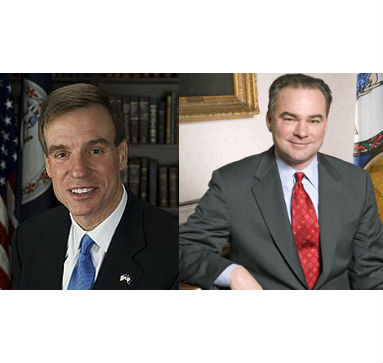
U.S. Senators Mark Warner and Tim Kaine, members of the Senate Budget Committee, joined eight of their colleagues to call on congressional leadership and President Obama to reach a budget deal that responsibly invests in middle class families, veterans, national security, infrastructure, education and access to public lands.
Share
The USA Freedom Act protects Americans’ civil liberties and enhances our national security. In addition to ending the bulk collection of data by the federal government, the USA Freedom Act increases the transparency of the government’s intelligence-gathering programs by making more information available to the American public.
Share
Sixth District Congressman Bob Goodlatte is mocking us in his latest article, “USA Freedom Act Protects Civil Liberties and National Security.” He has been sequestered in Washington so long that he believes he can blatantly lie to his constituents in the Valley. This brazen disregard for the intellect and the civil liberties of the citizens of Virginia’s Sixth District and the American people is horrifying.


We don’t take press releases or official statements as the final word. Digging in to get the whole story takes time and resources.