Virginia Tech, drones, and the future of delivery
A small crowd was gathered on the lawn in a neighborhood outside Blacksburg, squinting up into to the sunlight as a drone zoomed into view over the treeline and hovered above the grass.


A small crowd was gathered on the lawn in a neighborhood outside Blacksburg, squinting up into to the sunlight as a drone zoomed into view over the treeline and hovered above the grass.

In the second television ad of his 2018 Senate campaign, entitled “Research,” Senator Tim Kaine brings attention to the healthcare and economic benefits of investing in medical research.

For the second year in a row, donations to Virginia Tech surpassed $150 million. Tens of thousands of donors made more than $153.6 million in new gifts and commitments, combined, to the university during the 2017-18 fiscal year.

A Virginia Tech associate professor and University of Virginia professor have received funding to fight a type of nonalcoholic fatty liver disease.

Waynesboro City Council approved a resolution Monday providing $1 million in incentives to the Virginia Museum of Natural History to build a Waynesboro campus downtown.

The bracelet looks unassuming, just like any other smart technology worn around the wrist. But rather than counting steps or heartbeats, it serves another purpose.

This past March, Andy Cohen was caught in one of the worst snowstorms of the year. The Crozet native was on his way back to Blacksburg from touring graduate schools when his flight from Charlotte to Roanoke was canceled.

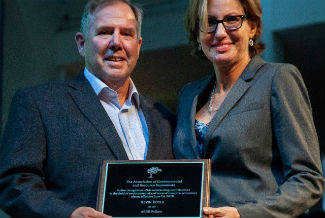
Receiving the highest honor from a respected academic association is a once-in-a-lifetime experience, but having that honor bestowed on you by a long-term mentee is almost surreal.

Sigora Solar, Virginia’s largest homegrown solar panel provider, is bringing its unique business model and new jobs to the Research Triangle in North Carolina.

The American Heart Association awarded Patrick Calhoun, a biological sciences graduate student, a predoctoral fellowship to carry out his dissertation research at the Virginia Tech Carilion Research Institute.
We have reached 57 percent of what we need to fund critical operations for 2026. If you have been waiting for the right time to support AFP, this is it.