
Virginia Tech among the nation’s best universities in U.S. News rankings

 Share
Share
Virginia Tech is among the nation’s best universities, according to U.S. News & World Report’s “America’s Best Colleges 2016.”
 Share
Share
Virginia Tech is among the nation’s best universities, according to U.S. News & World Report’s “America’s Best Colleges 2016.”
Share
Catastrophic oil spills, nuclear power accidents, and erupting volcanoes all share a common thread. They are environmental disasters where the flow of hazardous materials, dispersed by the natural movements of air and/or water, seem uncontrollable.
 Share
Share
Researchers at the Virginia Bioinformatics Institute at Virginia Tech have uncovered key cellular functions that help regulate inflammation — a discovery that could have important implications for the treatment of allergies, heart disease, and certain forms of cancer.
Share
Virginia Tech graduates outpace the national average when it comes to thriving at work, having great careers, and leading lives that matter.
Share
The long-range “visioning initiative,” first announced in May, kicks into high gear this week. Virginia Tech President Timothy D. Sands has appointed a broad-based steering committee of faculty to guide the effort to rethink the university of tomorrow.
Share
As the costs of a college education continue to soar, and politicians scramble for ways to make the academic experience more economically feasible, two Virginia Tech engineering education professors are investigating helpful strategies for avoiding pitfalls that prolong completion times when pursuing doctoral degrees.
Share
GenoCAD, a computer-assisted design environment for synthetic biology developed at Virginia Tech, has transitioned to GenoFAB LLC to engage new users and create new opportunities for innovation.
Share
Governor Terry McAuliffe announced Monday that Virginia has received $1.8 million in grant funding for a third year of its Going Global Defense Initiative (GGDI), administered by the Virginia Economic Development Partnership (VEDP).
 Share
Share
The University of Virginia has successfully completed a comprehensive system security upgrade in response to a cyber attack originating in China. The University took these actions to further enhance the security of data and information stored on University resources and to aid in prevention of future cyber attacks.
 Share
Share
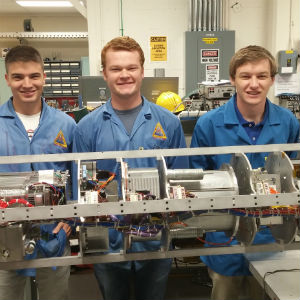
How would a 3-D printer work in the microgravity of suborbital space after surviving a jarring ride 100 miles above the earth? A group of Virginia Tech College of Engineering students hope to have an answer next week after a launch at NASA’s Wallops Flight Facility.


We don’t take press releases or official statements as the final word. Digging in to get the whole story takes time and resources.