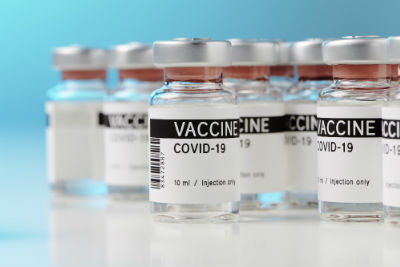
Will the U.S. population support donating part of its COVID-19 vaccine stockpile to less prosperous countries? A new study by researchers at Virginia Commonwealth University investigates the question.
The pandemic is affecting every country, but not every country has equal access to the lifesaving COVID-19 vaccines. Recent estimates show that high-income countries — which have just one-fifth of the global adult population — have purchased more than half of the world’s total vaccine doses, resulting in disparities for low- and middle-income countries.
“COVID-19 is a true global pandemic that has touched every nation on Earth. Borders closed, economic consequences and an incredible level of human suffering, with now more than half a million people who have died of COVID in the U.S. and many more worldwide,” said lead author Jeanine Guidry, Ph.D., an assistant professor in the Richard T. Robertson School of Media and Culture in the College of Humanities and Sciences and director of the Media+Health Lab at VCU. “COVID-19 has shown how interconnected we all are, and to defeat it we will need to work together on a global scale.”
For the study, “U.S. Public Support for COVID-19 Vaccine Donation to Low- and Middle-Income Countries during the COVID-19 Pandemic,” the researchers conducted a survey of 788 U.S. adults that assessed the support of different population groups for donating vaccines, as well as in what quantity and in what time frame.
It found that older respondents were both less likely to endorse higher levels of COVID-19 vaccine donations and were more likely to want to wait until all in the U.S. who want the vaccine have received it.
“We know that while COVID affects everybody, the majority of the people who die from it are people who are older,” Guidry said. “So this finding may reflect that vulnerability.”
It also found that respondents who identified as Democrats were more likely to endorse more and faster COVID-19 vaccine donations to low- and middle-income countries than Republicans.
“It is possible that those who identify as Democrats were more likely to support higher levels of donation because it may be connected to a belief in health care as a human right and health care for all,” Guidry said.
People without health insurance also were less likely to support donation, and wanted to wait until everyone in the U.S. who wants a vaccine has received it.
The study also found that people who rated higher on the “social dominance orientation” scale were both less likely to endorse higher levels of COVID-19 vaccine donations as well as more likely to want to wait until all in the U.S. who want the vaccine have received it. Social dominance orientation is a personality trait measuring a person’s support for social hierarchy and belief that their group is superior to others.
“Social dominance orientation may actually be a fundamental driver of support for vaccine donations during the pandemic,” said Paul Perrin, Ph.D., a co-author on the study and an associate professor in the Department of Psychology at VCU. “When people believe in their heart that some individuals are inherently better than others and should therefore be afforded more societal privileges, that is a deep worldview that can color many of their other belief systems.”
The study’s results also have some encouraging signs, said co-author Bernard Fuemmeler, Ph.D., a professor in the Department of Health Behavior and Policy in the VCU School of Medicine.
“Despite some of the differences we observed with respect to age, party affiliation or social dominance, it is encouraging that, for the most part, there was a majority support for donating as much as 10 percent of vaccines we have available in the U.S. to other countries,” he said. “Despite some hesitancy among a minority of the sample, many we surveyed recognized the importance of closing the gap. Policymakers should be encouraged that proposals to donate the vaccine will be met with acceptance.”
The study’s findings could be valuable to policymakers, health care providers and public health communication professionals working to persuade and target key segments of the U.S. public to support the donation of vaccines to countries that lack the resources to develop and purchase sufficient quantities.
“Our goal is to provide indications about how we can best communicate to the public. How can we best say: ‘OK, we need to [donate vaccines] but we want your buy-in. We want your support,’” Guidry said. “Having support for these decisions is going to be critically important. [This study] provides an important starting point.”
In addition to Guidry, Perrin and Fuemmeler, the study’s authors include VCU researchers Kellie Carlyle, Ph.D., an associate professor in the Department of Health Behavior and Policy; Carrie Miller, Ph.D., a postdoctoral fellow in the Department of Health Behavior and Policy; and Mark Ryan, M.D., associate professor in the Department of Family Medicine; as well as Candace Burton, Ph.D, assistant professor at the University of California at Irvine; Linnea Laestadius, Ph.D., an associate professor in the School of Public Health at the University of Wisconsin–Milwaukee; and Emily Vraga, Ph.D., an associate professor in the Hubbard School of Journalism and Mass Communication at the University of Minnesota.
The study is the second to emerge from the researchers’ survey findings. The first study, published in December, analyzed Americans’ willingness to get a COVID-19 vaccine with and without emergency use authorization.
Support AFP



 Share
Share

Chris Graham