By Tony Biasotti
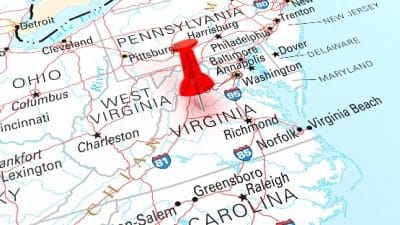
 The “fescue belt” stretches 1,000 miles across the southeastern United States, from Virginia and the Carolinas in the east to Kansas and Oklahoma in the west. It’s named for its predominant grass, tall fescue, which feeds millions of beef cattle over of thousands of farms and ranches.
Tall fescue was planted widely in the southeast in the mid-20th century because it’s a hardy grass, resistant to drought and cold, which makes it perfect to feed cattle during the winter and spring. But it harbors a fungus that can cause health problems in cattle, especially during the hot summer. And it’s an invasive species, native to Europe, that can crowd out wildflowers and other native plants, which could be contributing to the decline in the population of bees and other pollinating insects.
A new study led by Megan O’Rourke, an associate professor in the School of Plant and Environmental Sciences in the College of Agriculture and Life Sciences at Virginia Tech, will address both of these problems. The research team will plant native prairie grasses and wildflowers in pastures at research stations in Virginia and Tennessee, and on six on-farm sites in Northern Virginia, including on Thomas Jefferson Foundation farmland.
“We’re trying to transform the landscape to support both cattle and pollinators by planting more native wildflowers on farmland,” said O’Rourke.
The $1.8 million project is funded half by a federal grant and half by contributions of time, land, cattle and money by Virginia Tech, the University of Tennessee, farmers working with the researchers, and a nonprofit called Virginia Working Landscapes. The team will test 20 different wildflowers native to Virginia and Tennessee and will measure which ones attract the most bees and, when planted alongside native grasses, produce the healthiest cattle. The grant was awarded in December, and the work is getting underway in early 2020.
In December, the National Resources Conservation Service of the U.S. Department of Agriculture awarded $12.5 million to 19 different research projects studying various aspects of conservation on agricultural lands; the bees-and-beef study is one of four studies that will be conducted partly or wholly in Virginia, under grants totaling $2.3 million. The bees-and-beef grant is part of a broad effort by the federal government to study and combat the ongoing decline in bee populations.
O’Rourke is one of five Virginia Tech faculty members working on the study. Another is Ben Tracy, a Virginia Tech professor of grassland ecology and Virginia Cooperative Extension specialist who has been studying native prairie grasses and the effects of tall fescue on cattle for the past 15 years or so.
“The main health problem that fescue causes for cattle, fescue toxicosis, is not fatal, but it probably costs the cattle industry millions of dollars a year,” Tracy said. Affected cattle have trouble regulating their body temperatures in hot weather and they don’t eat as much and gain as much weight as healthy cattle. “Hopefully, adding native grasses and wildflowers to pastures will reduce fescue toxicosis.”
If this study succeeds, adding native wildflowers to pastures in the fescue belt will become a new conservation practice that USDA’s National Resource Conservation Service will cost share.
“If we can find a way, we can improve resources for pollinators and also improve livestock performance,” Tracy said. “It would be a win-win for the environment and for beef cattle producers.”


 Share
Share
AFP