About a third of food produced in the U.S. goes uneaten. While most consumers can monitor the food tossed into home trash cans or left on a restaurant table, significant food loss occurs throughout the supply chain.
The U.S. Department of Agriculture’s Economic Research Service defines food loss and waste as reductions in edible food mass anywhere along the food chain. Getting a more accurate measurement of that loss could clarify how some agricultural policies result in farm-to-fork practices that exacerbate the problem.
Tony Banks, senior assistant director of agriculture, development and innovation for Virginia Farm Bureau Federation, said food loss occurs in all phases in the supply chain—not only in processing, distribution and retail, but on-farm too.
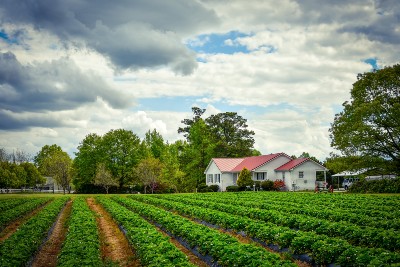
“Farmers want to harvest as much of their crop as possible,” he noted. “But vegetables can be left unharvested for many reasons including crop damage, low quality, food safety protocols, insufficient labor and market price. If not harvested or gleaned, vegetables can get plowed in and recycled as soil nutrients.”
Three faculty members in the Department of Agricultural and Applied Economics in the College of Agriculture and Life Sciences at Virginia Tech received a $633,551 grant from the USDA’s National Institute of Food and Agriculture to fund a four-year research project on the economics of food loss and waste. Their long-term goal is to develop methods for measuring on-farm food loss and waste, and to construct a nationwide measure for vegetables as well, which is missing from existing measures of supply chain loss.
“This grant will allow the team to fully investigate the impact of agricultural policies on farm decision making that will address these important and crucial issues of waste,” said Ford Ramsey, a co-principal investigator and an assistant agribusiness professor.
Reducing food loss and waste may have implications not only for agriculture’s environmental impact, but for food prices as well, said John Bovay, an assistant professor of food and health economics and principal investigator for the project.
The team will focus on vegetables because they are highly perishable, likely making up the majority of on-farm crop loss, added Wei Zhang, a co-principal investigator and an assistant professor of environmental and natural resource economics.
“Vegetables are healthy but relatively expensive for consumers,” she explained. “On-farm loss of vegetables may be particularly responsive to market forces and climate conditions.”
USDA has partnered with the U.S. Environmental Protection Agency to cut the nation’s 133 billion pounds of food loss in half by 2030. The annual retail value of food loss is estimated at $161.6 billion or about 1,249 calories per person each day.
Support AFP



 Share
Share

Contributors