John Jelesko was hiking along the Appalachian Trail when he saw his quarry — one which other hikers would think of as their nemesis.
“Careful,” he said as he and David Haak stopped at a white blaze marker and pulled out his bag of scientific tricks. Though many people want to avoid poison ivy, the thick wall of poison ivy plants bordering the trail is just what the team of Virginia Tech researchers were after.
While scientists know about poison ivy’s ability to cause an all-consuming itch and even spawn terrible rashes, little is known about the plant itself or how it grows.
Jelesko and his team are out to change that.
Jelesko, associate professor of plant pathology, physiology, and weed science in the College of Agriculture and Life Sciences, Haak, an assistant professor in the same department, and Lynn Resler, an associate professor in the College of Natural Resources and Environment, are mapping and surveying the growth patterns of poison ivy where it lives in order to glean more information about how it grows and its genetic make up.
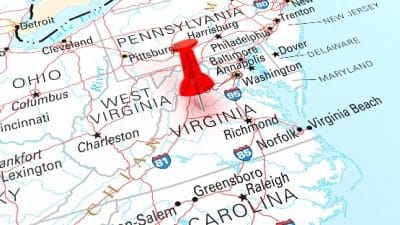
The trio recently set out on the Appalachian Trail to perform some preliminary research about the geolocation of the plant as well as collect DNA samples starting near McAfee’s Knob in Southwest Virginia.
“In many ways this plant is the familiar stranger,” he said, “We’re all told ‘leaves of three, let it be,’ and that’s all very sensible, but beyond that there is remarkably little specific scientific knowledge about poison ivy.”
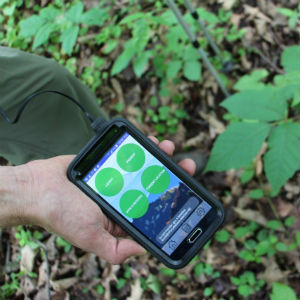
In order to collect geolocational data of the plant the team used a smartphone app that enables users to tag where they find poison ivy. Jelesko, a Fralin Life Science Institute-affiliated faculty member, and his team stopped at every “white blaze” marker along a 60-mile segment of the Appalachian Trail to catalogue and tag samples. The project was funded by a College of Agriculture and Life Sciences Proposal Development grant.
Though poison ivy is native to the United States, it’s known as a neo-invasive species because it tends to overtake landscapes. The plant has an uncanny knack to cozy up to human populations but it is also found in forests.
“Poison ivy has an ability to cohabitate with humans and we think that those plants will show different signatures of adaptions than those found in a natural forest, its native habitat,” said Haak.
One aspect of the plant’s behavior that has been proven is poison ivy’s affinity for greenhouse gases. A 2006 study showed that as the planet warms, poison ivy is predicted to grow faster, bigger, and more allergenic, causing much more serious reactions to urushiol – the rash-causing chemical found in the plant’s oils. Urushiol is extremely potent. Only one nanogram is needed to cause a rash, and the oil can remain active on dead plants up to five years.
“Water, light, and carbon dioxide are poison ivy’s bread and butter,” said Jelesko, who originally became interested in studying poison ivy after a day of yard work and a bout with the plant that left him with a nasty rash.
Jelesko hopes to eventually hike the entire Appalachian Trail and extensively catalogue the poison ivy samples he finds along the way, as well as enlist the help of citizen scientists in geotagging poison ivy populations.
Though he didn’t experience any itching on this research trip, he did pick up a nickname by fellow hikers, as is custom on the AT.
The name?
“Rash.”




 Share
Share

AFP