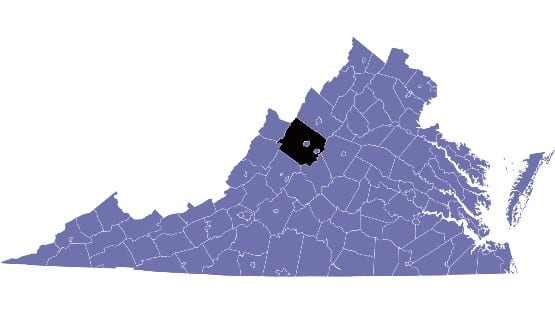
Voters in Augusta County, Staunton and Waynesboro will be asked on Tuesday if they want to approve a 1 percent local sales tax to provide local money for new school construction and renovation projects in their individual localities.
Of course we do, right?
Because what’s 1 percent, in the grand scheme of things.
It’s either this 1 percent, increases in property taxes, or, the other alternative, letting things go to rot.
Our job here: to give you a sense of what our school systems would do with the money, if and when it’s approved.
Augusta County
An explainer from the county tells us that the school system funds most of its capital needs through existing revenue sources and bond financing.
The proposed tax would create a dedicated funding stream specifically for building and renovating school facilities.
Augusta County Public Schools has identified priority capital improvement projects that the proposed increase would help support.
These include major renovations to Valley Career and Technical Center, Stewart Middle School, Stuarts Draft Middle School, and the construction of a new bus garage.
The priority projects:
- Valley Career and Technical Center: $49.2 million
- Stewart Middle School: $35.9 million
- Stuarts Draft Middle School: $32.6 million
- ACPS Transportation Facility: $3 million
Staunton
Staunton City Schools commissioned a study of its building needs over the summer, and, survey says:
There are $168 million in unfunded capital needs.
The biggest identified need is at Shelburne Middle School, which faces $15.4 million in required maintenance, which is just the starting point.
The school system is targeting the school, which was built in 1962, for a $56.8 million renovation to bring it to 21st century standards, and add 14 classrooms, a new kitchen and an auditorium/performing arts center.
Growing student enrollment is an issue at Bessie Weller Elementary School, which was built in 1952, faces $13.9 million in required maintenance, and a renovation coming in at a projected cost of $32.1 million.
A comprehensive renovation would add classrooms to meet instructional capacity needs.
A.R. Ware Elementary School has classroom space available, but the HVAC installed in 2000 is nearly 30 years old, and its diesel fire pump and water heater are 21 years old.
The study, which puts required maintenance at $15.7 million, and a renovation at $31.6 million, recommends enhancing the security vestibule first, then infrastructure and roofing, then lighting and HVAC.
Enrollment pressures are also an issue at T.C. McSwain Elementary School, which faces $22.3 million in required maintenance, with a comprehensive renovation coming in at a projected cost of $26.4 million.
The issue at McSwain is that four temporary learning cottages are being used to house the fourth grade this year because growing enrollment has strained capacity.
The study commissioned by the school system recommends addressing the security vestibule and parking first, then the remaining mechanical systems. A comprehensive renovation would add classrooms to meet instructional capacity needs.
One last one: the Dixon Educational Center, which houses the city’s preschool program and special education and student services staff.
Since it has never been renovated, the building has numerous code deficiencies. Its piping is more than 60 years old, and most of its HVAC dates to 1972.
Required maintenance cost there: $10 million.
Renovation: $20.6 million.
Waynesboro
The first priority is the Waynesboro High School renovation project.
Based on legal and legislative guidance, the city believes that money from the 1 percent sales tax could be used to support debt service on the WHS renovation.
Before the school sales tax became an option, the city developed a funding plan for the renovation based primarily on increases to the real estate tax rate, supplemented by a portion of the previously adopted meals tax increase.
The current project financing estimate assumes approximately $54 million of borrowing, with maximum annual debt service of approximately $4.33 million.
Per an explainer on this, the city does not need to generate the entire $4.33 million from new revenue. As existing debt is retired, approximately $747,500 of annual debt-service capacity is expected to become available.
Accounting for those reductions, the funding plan called for building approximately $3.5 million of new recurring annual revenue to support the WHS debt.
Waynesboro City Council laid out a three-year plan for coming up with that money:
- FY2026: Council increased the real estate tax rate by three cents, generating approximately $900,000, and dedicated approximately $200,000 from the 0.5 percent meals tax increase. This came up with $1.1 million in recurring funding for the project.
- FY2027: Council plans to increase the real estate tax rate by an additional three cents, bringing the total recurring revenue available for WHS debt service to approximately $2.0 million annually.
- FY2028: Under the existing funding plan, the city would increase the real estate tax rate by an additional five cents, generating approximately $1.5 million and bringing total recurring funding to approximately $3.5 million annually.
The existing plan phases the recurring revenue necessary to support the WHS borrowing from $1.1 million in FY2026, to $2.0 million in FY2027, and ultimately to $3.5 million in FY2028.
If voters approve the referendum, the money from the 1 percent additional sales tax would be expected to replace nearly all of the approximately $3.5 million in recurring revenue the city otherwise needed to generate for the project.
Accordingly, if the new sales tax revenue replaces the need for those funds, the City Council could reduce the real estate tax rate, redirect some or all of the existing revenue to other city priorities, retain it for capital or reserves, or use a combination of these approaches.
Support AFP



 Share

Chris Graham