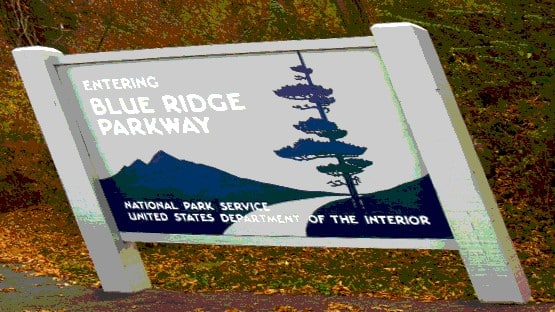
The National Park Service said today that 22 miles of the Blue Ridge Parkway in Virginia will be resurfaced this summer, which, breaking news, the Trump/Musk oligarchs haven’t gutted 100 percent of everything just yet.
Work is expected to start on the project next week and continue through this September, according to the NPS, which, surprisingly, still has a PR staff.
Visitors that encounter active work zones can expect short duration, single-lane closures.
Work will take place from Milepost 122, at U.S. 220, to Milepost 143, near Pine Spur, including paved overlooks.
Impact
Contractors, per a press release from the NPS folks, will work in short sections and repeat the resurfacing process as they move from section to section of the full project.
The steps in this process include prepping the surface, applying a chip seal surface of liquid asphalt and stone chips, allowing the surface to properly cure, vacuuming the work area to minimize loose gravel, applying a fog seal on top of the chip seal surface, and finishing by painting new road marking lines.
The process will then repeat on the next section of the project.
Be ready
As with any road project, motorists and park users must exercise caution. In the interest of visitor safety, park visitors are asked to:
- Check the Blue Ridge Parkway Alerts and Conditions page for regular updated work zone information.
- Expect delays while work takes place Monday through Friday. Lane closures will be managed with flagging operations and a pilot car to lead traffic through work zones.
- Observe reduced speed limits in work zones, 24 hours a day, 7 days a week; to maintain safe operations and allow for proper curing of pavement.
- Anticipate loose gravel on the road surface during pavement curing times. Bicyclists and motorcyclists are asked to exercise extreme caution as loose gravel on top of the paved surface, during the required curing time, could result in loss of control. On-site message boards will advise against bikes.
- When circumstances prevent bicyclists from keeping up with traffic, dismount and move off the road to let the on-coming traffic pass when traveling through a single lane closure.
Sales pitch
The NPS presser tells us that the agency’s pavement preservation strategy focuses on keeping the good sections good and returning fair sections to good condition.
“Pavement preservation is a regular road maintenance strategy in national parks,” the release tells us. “Studies find that for each dollar spent on pavement preservation between $6 and $10 in future pavement rehabilitation costs are saved. Funding for road maintenance in national parks, including the Parkway, comes in large part from the Highway Trust Fund, which is derived from a federal gas tax managed by the Federal Highway Administration.”
Only because Big Balls hasn’t hit delete yet.
Support AFP


 Share
Share

Chris Graham