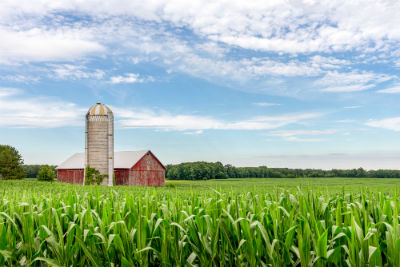
Farming is a 24/7 job, and Virginia farmers work every day to provide us with food, fiber and fuel while protecting the state’s natural resources.
That’s something to celebrate during National Ag Week, March 20-26. The national observance is a time when farmers, agricultural associations, corporations, universities and others recognize and celebrate the abundance provided by American agriculture.
As the world population soars, there is even greater demand for the food, fiber and renewable resources produced by farmers in the U.S. Nationally, there are 2 million farms, and 98 percent of those farms are operated by families.
In Virginia, the 2017 Census of Agriculture found 43,225 farms, with the average size being 181 acres. Farmland covered 7.8 million acres of the state, according to the census, which is conducted every five years.
The census also found that almost 400,000 acres on over 2,000 farms were enrolled in a conservation easement program, which means that land is being protected from development.
“Farmers are the original stewards of the land,” explained Wayne F. Pryor, president of Virginia Farm Bureau Federation, the state’s largest farmers’ advocacy group. “Land is their livelihood, and they take extra precautions to conserve it for future generations.”
Many Virginia farmers employ sustainable practices like minimal-till or no-till planting, which decreases the amount of soil displacement and risk of erosion when crops are planted. According to the census, 32 percent of Virginia’s cropland—over 1 million of the state’s 3.1 million cropland acres, was being planted using no-till practices.
Additionally, 4,034 farms planted cover crops on 409,862 acres, preventing soil erosion and helping cropland retain the nutrients that keep it productive. And almost 40,000 acres of farmland were planted with riparian buffers or have restored wetlands on the property. Riparian buffers are forested or grassy areas adjacent to waterways that help protect water quality.
Nationally, American Farm Bureau Federation reports that more than half of America’s farmers intentionally provide habitat for wildlife. Additionally, careful stewardship by farmers has resulted in a 34 percent decline in erosion of cropland by wind and water since 1982, according to AFBF.
Additionally, U.S. farmers and ranchers have cut greenhouse gas emissions 24 percent since 1990 while producing 80 percent more pork, 48 percent more milk and 18 percent more beef, according to AFBF.



 Share
Share

AFP