Some anthropologists believe that competitive sports grew out of a need to channel aggression without killing the opponent. It also may have had an evolutionary purpose as the genes of the fittest members of a tribe could be passed onto to the next generation.
If fandom of the NBA Playoffs, Super Bowl, World Series, and most recently for the U.S., the World Cup, are any indication, interest in competitive sports has not waned.
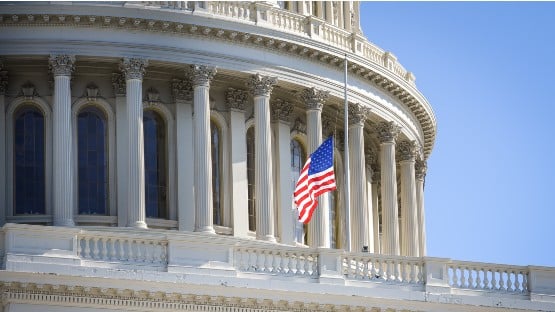
And this season begins another competition, political elections, based on ideology rather than brawn that are no less fiercely contested.
To your right, I give you the Republican Party, which stands for low taxes, unfettered capitalism, rugged individualism, no limits on gun ownership, dependence on fossil fuels, privatization of social programs such as Medicare, Social Security, and public education, and health care paid for through the private health insurance market.
Assuring access to healthcare is not my problem, it’s not the government’s problem, it’s your problem.
To your left, I give you the Democratic Party, which stands for taxation based on income level, regulated capitalism, empathy and shared responsibility, gun violence prevention laws, a clean environment based on renewal energy, providing a social safety net to protect the most vulnerable members of society, and universal access to healthcare. The health of a nation is dependent on the health of its people.
Now ask yourself this question. If Democrats support UHC, and there have been times that Democrats have held the White House and had majorities in both sides of Congress, why don’t we have universal healthcare?
This is an important question, because when you look at Democratic candidate ads, almost all of them come out in support of UHC.
The roots of UHC date back over a century when, in 1914, the Association for Labor Legislation drafted a model bill to provide workers with free medical service and hospital care, sick pay, and a modest death benefit. Although this proposed legislation was not enacted, at about the same time private insurance companies began offering health insurance policies, although they were marketed primarily to individuals and not employers.
In the 1930s, the Franklin Roosevelt administration supported UHC, but realized they had a better chance of passing Social Security, so focused their efforts in getting that legislation passed.
FDR’s successor, Harry Truman, also supported the idea of UHC, but found that the opposition from the American Medical Association and private insurers made passage of legislation unlikely. He was also opposed by Southern Democrats (so-called Dixiecrats) who opposed the plan if it covered African-Americans.
By the 1960s, Lyndon Johnson found himself in the unique position of having a Democratic majority in both the House of Representatives and the Senate, and therefore in a good position politically to finally pass UHC legislation. However, he faced the same opposition as Truman, and consequently pushed for affordable healthcare for seniors and the economically needy. By focusing on these two demographic groups, Johnson was able to secure the support of about half of the Republicans in Congress to guarantee passage of Medicare and Medicaid.
In the 1970s and 1980, several pieces of legislation were passed to help Americans gain access to healthcare, such as the Consolidated Omnibus Budget Reconciliation Act (1985), which guaranteed workers that they could continue their private health insurance at the same rate they were paying when employed, if they were laid off, terminated, or if changed jobs.
In the 1990s, Bill Clinton found himself in the enviable position of having a Democratic majority in both houses but as with his Democratic predecessors, found that opposition was too powerful to overcome. And unlike President Johnson, who had some support from Republicans to get Medicare and Medicaid passed, this time Republicans stood firmly against the proposed legislation.
Nonetheless, in 1997, Democratic Sen. Edward Kennedy and Republican Sen. Orrin Hatch jointly sponsored the Balanced Budget Act which included a provision establishing the Children’s Health Insurance Program. Today, over 35 million children receive healthcare that is paid for by either Medicaid or CHIP.
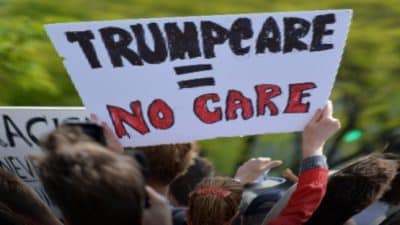
The last piece of legislation to expand access to healthcare came with the Patient Protection and Affordable Care Act, which will forever be associated with Barack Obama and more often referred to as Obamacare. However, to win passage, Democrats had to make many concessions. Although originally conceived as UHC legislation, rather than run against strong opposition from the private health insurance industry, the bill created a marketplace for insurers to compete, hopefully keeping insurance prices down, and provided for subsidies to help individuals afford the policies.
Even with these compromises, every Republican voted against it.[1]
[1] For more history on attempts to pass universal healthcare legislation, read chapter 4, “The Politics of Health Care”, in The Case for Universal Health Care.
So, understanding the history of UHC legislation, and recognizing that Democrats support and advocate for it, what are the chances of passage if Democrats could win majorities in both houses in the 2026 elections? Based on my analysis and interactions with Democrats, my assessment is not at all.
To better understand why, let’s go back to 2010 when the PPACA passed. Throughout the political warfare that ensued, the media focused more attention on the battle rather than the substance of the legislation. The talking heads on CNN, MSN and Fox approached it like a sporting event and seldom discussed why the legislation was needed, who benefited, or what medical services the legislation would pay for. Unfortunately, Democrats did not do a good job educating the public about the content of the legislation nor how it would benefit them. Consequently, when it finally did pass, Democrats, rather than publicly celebrating the victory, instead distanced themselves from it.
Although the legislation is far from perfect, it did make health insurance more affordable and accessible to millions of Americans. Today, more than 20 million Americans, with assistance from PPACA subsidies, get their insurance through the PPACA marketplace. And the legislation expanded access to Medicaid and CHIP, which increased enrollment in those programs by another 20 million. However, rather than brag about this accomplishment, Democrats allowed Republicans to reframe the legislation, such as branding it as socialized medicine (it’s not) and put Democrats in the position of having to continually defend it.
Communications is another problem Democrats have never resolved. A couple of years ago, I watched a Democratic congressman acknowledge on one of the political talk shows that Democrats were failing to successfully message their position on an issue.
Several months later, I heard another Democrat say the same thing about another issue, and later again another Democrat repeat the same acknowledgement. When you know you have a problem, you solve it. Instead, these politicians were admitting that their party lacked the capacity to communicate effectively.
To be successful, all members should be on the same page when it comes to communicating where the party stands on an issue with disagreements resolved internally prior to bringing forth legislation. Instead, the party lacks cohesion, does not engage in strategic thinking, and cannot speak as a collective body. While they may support UHC, the Democratic Party currently lacks the organization it takes to educate the public, nor do they have the knowledge and tools it takes to utilize the media to their benefit.
When it comes to an actual plan for UHC, Democrats are like the dog that chased the car but didn’t know what to do with it once it caught it. Despite their advocacy, there is no agreed-upon plan. That’s one of the reasons I wrote my book; to lay out a detailed plan for UHC including how it will be organized, what health services will be covered, how it will be paid for, and the economic impact and benefits it will produce.
When the book was published, I sent announcements to those members of Congress who at the time championed UHC. The response was amazing. Not one single member of Congress responded. Not even a “thank you for sharing this information” or “I look forward to reading your work.” Nothing, nil, zilch. A few months ago, I sent a free copy to one of the more prominent Democratic progressive supporters of UHC in the House of Representatives. Same lack of response. Not even a “thank you for sharing your book.”
This is not just sour grapes on my part. Consider the following statement that Sen. Mark Warner made on Facebook (August 10, 2026): “Healthcare costs way too much. Millions of Americans get priced out of their coverage annually. We need to fight back against Republicans’ draconian cuts … and work towards a permanent universal coverage model, too.”
Notice the last part of the paragraph where he acknowledges that Democrats do not have a model/plan in place. That’s right, after decades of discussion, the Democratic Party does not have a unified approach to implement UHC. And it’s not just Sen. Warner. Look up the Facebook page of any Democrat currently running for office. You’ll see that most of them support and advocate for UHC, but not one will have anything substantive to say about how it will work. Even the person I consider to be our country’s greatest political advocate for what he refers to as Medicare For All, Sen. Bernie Sanders, rarely speaks to the specific details of his plan.
My wife says that I am being too negative and too critical. However, for an issue that I am obviously passionate about, I am frustrated by the Democratic Party’s inaction and ineptitude. I used to think that with health care costs continually increasing particularly for employers, with many Americans fighting insurance companies over denials for treatments, and with doctors and hospitals fed up with having to battle insurance companies over payments and reimbursement rates, by the end of this decade Americans would be ready for and would strongly support UHC.
Unfortunately, the Democratic Party is currently not ready to accomplish this. And for that, I’m just being pragmatic.
Correction: Sen. Bernie Sanders and several Democratic senators introduced the Medicare for All Act of 2025. (S 1506). The same bill was introduced in the House by Representatives by Pramila Jayapal and cosigned by over 70 fellow Democrats. (H.R. 3069). It is very comprehensive and mirrors many of the features I propose in my book. My apologies to Sen. Sanders, as it is evident that significant planning and thought have gone into this proposal. Nonetheless, the Democratic Party does not appear to have the organization and cohesion to go the distance with this legislation.

 Share
Share