The American Israel Public Affairs Committee, AIPAC, as a self-described bipartisan organization, has been advocating positions that are closely aligned with successive Israeli governments, regardless of whether those policies advance broader Israeli or U.S. interests or long-term regional stability.
It has consistently backed Israeli government actions — including military operations, settlement expansion, and a hard line toward the Palestinians — while rarely using its considerable leverage to advocate for meaningful peace oriented concessions or compromises.
To understand AIPAC’s role in promoting U.S.-Israel relations and how consequential it has and continues to be, it is necessary to examine its formal mission and the scope of its activities. Founded in the 1950s, it seeks to strengthen the U.S.-Israel relationship to ensure America’s alliance with Israel remains strong, grounded in shared strategic interests and democratic values.
AIPAC is the most influential foreign policy advocacy group in the United States.
AIPAC’s operational mode
AIPAC’s core activities center on lobbying Congress for U.S. aid for Israel, promoting security cooperation, and sustaining a pro Israel consensus across both major parties. It operates by cultivating close relationships with lawmakers, holding large policy conferences, and mobilizing a nationwide activist network.
It organizes briefings and trips to Israel for U.S. officials, framing issues such as Iran’s nuclear program, regional terrorism, and Israel’s security needs through the Israeli government’s lens. AIPAC mobilizes community support for officials who back a strong US Israel alliance, rewarding allies and targeting critics through campaign spending and grassroots pressure.
Through its affiliated political action committee and super PAC, the United Democracy Project, AIPAC channels extensive financial resources into U.S. elections. Since the 2022 midterm elections, its PAC and super PACs have spent over $200 million backing reliably pro Israel candidates and opposing those critical of Israeli policy.
The UDP alone spent over $37 million in 2024, up from $26 million in 2022, pouring nearly $10 million into Rep. Jamaal Bowman’s race in New York, over $5 million into Rep. Cori Bush’s race in Missouri, and more than $4 million into Dave Min’s race in California’s 47th District.
After the Oct. 7, 2023, Hamas attacks, AIPAC strongly supported Israel’s war against Hamas, advocating expanded U.S. military aid and emphasizing Israel’s right to self-defense. It lobbied against congressional efforts to condition or restrict arms transfers, fostering an environment where it became “nearly impossible” for lawmakers to halt arms sales despite mounting concerns over mass civilian casualties in Gaza and war crimes.
This has effectively sustained a war that many legal scholars, human rights organizations, and UN experts describe as genocidal, while shielding Israeli leaders from accountability for the humanitarian catastrophe in Gaza.
AIPAC advocacy vs. U.S. national interests
AIPAC portrays its work as fully aligned with U.S. strategic interests, arguing that a militarily strong Israel is an indispensable democratic ally in a volatile region. It falsely casts support for Israel, including military aid and diplomatic backing at the UN, as a natural extension of American security and moral commitments.
In this narrative, any easing of U.S .support of Israel is treated as a victory for shared adversaries such as Iran, Hezbollah, and Hamas. Yet its agenda often mirrors the priorities of Israel’s most hardline governments, diverging from long term U.S. interests and stated diplomatic goals. It has lobbied against peace initiatives, settlement freezes, and engagement with Iran — even when pursued by U.S. administrations and endorsed by security experts.
By reinforcing maximalist Israeli positions and opposing compromise, AIPAC has deepened the belief across the Arab world, Europe and the Global South that U.S. diplomacy is one-sided and Washington is unwilling or unable to act as an honest broker. AIPAC’s tight alignment with Netanyahu’s obsessive policies on Iran, settlement expansion, and military operations in Gaza and the West Bank severely exacerbates this problem.
When Washington seems constrained by domestic lobbying from conditioning aid or pressing for reduced civilian harm or renewed diplomacy, it reinforces the impression that U.S. policy serves a single lobby’s preferences rather than broader American interests.
In this sense, AIPAC’s influence has made de-escalation and sustainable peace harder to achieve.
AIPAC’s hardline stance on Iran
AIPAC has long championed a hardline approach to Iran, viewing the Islamic Republic as Israel’s foremost strategic threat. It led opposition to the 2015 Joint Comprehensive Plan of Action, backing “Citizens for a Nuclear Free Iran,” which reportedly spent $20-40 million lobbying against President Obama’s agreement. Even after the deal took effect, AIPAC pushed for renewed sanctions, arguing that any relief fueled Iran’s regional ambitions and weakened Israel’s security.
Under the Trump administration, AIPAC backed efforts to dismantle the JCPOA and endorsed the “maximum pressure” campaign despite warnings from non proliferation experts that it would accelerate Iran’s nuclear advances and embolden hardliners.
Framing Iran’s “malign behavior” as proof of the deal’s failure, AIPAC fueled a policy shift culminating in Trump’s 2018 withdrawal and sweeping renewed sanctions.
The result strengthened Iran’s Revolutionary Guard Corps and left Israel confronting a more capable nuclear program with fewer diplomatic options. AIPAC, working with congressional hawks, pushed new sanctions legislation and funded think tanks and media outlets promoting a path to destabilization or regime change.
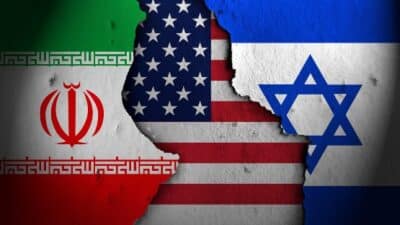
Its sustained hostility toward Tehran helped normalize confrontation as policy orthodoxy, blurring the line between deterrence and aggression and paving the way for today’s spiraling and increasingly disastrous war, where both Israel and the United States appear trapped in a self-defeating conflict with Iran.
AIPAC’s advocacy to Israel’s detriment
When a powerful lobby demands a single, hardline course, it narrows policy choices and sidelines diplomacy. AIPAC’s reflexive backing for military escalation, settlement entrenchment, and resistance to meaningful Palestinian self-determination has encouraged Israeli leaders to favor short-term advantage over long-term legitimacy and security.
What once seemed “tough” — maximum pressure on Iran, indefinite occupation, opposition to genuine peace talks — has fueled entrenched conflict, growing isolation, and rising accusations of apartheid and even genocide in international forums, all eroding Israel’s strategic position.
The consequences are now glaring: a horrific war against Iran, an unending Israeli-Palestinian violent conflict, global boycott campaigns, investigations at the International Court of Justice and International Criminal Court, and fraying ties with key partners in Europe and the Global South.
Yet AIPAC’s influence has helped shield Israeli leaders from accountability, postponing the internal reckoning that might have forced a course correction. In this sense, AIPAC has acted less like a friend warning of danger than an enabler assuring Israel it can flout international norms without cost — an illusion that has made the country far less secure and a pariah state at that.
By using its clout in Washington to support Israeli leaders and policies that reject or defer a viable two state solution, AIPAC has prolonged a cycle of occupation and escalating resistance, leaving Israel with deepening moral peril and global isolation.
AIPAC ignored the near-universal consensus that Israel’s long-term security is inseparable from a just resolution to the conflict with the Palestinians.
AIPAC and Israel’s growing isolation
By lobbying to shield Israel from accountability — diluting UN resolutions, opposing conditions on aid, and discouraging pressure over settlements and human rights abuses — AIPAC has helped entrench policies in Gaza, the West Bank, and beyond that much of the world now regards as violations of international law.
Consequently, more states, civil society groups, and international institutions see Israel not as a besieged democracy but as a power waging wars with impunity. When the United States furnishes Israel weapons and diplomatic cover amid mounting evidence of Palestinian devastation, AIPAC becomes complicit in the very abuses it condemns elsewhere.
AIPAC cannot be blamed alone for the disastrous war with Iran, but it helped create the environment that made it possible. Mistaking rigidity for strength, it delivered neither peace nor security for Israel — only the illusion of safety amid endless conflict.
AIPAC’s legacy is one of profound loss: Israel isolated, adrift and morally diminished, and America stripped of its conscience.
Support AFP


 Share
Share