 Global climate change and human conflict are two different problems, dealt with by different groups, right? Wrong. In fact, the United States military combats terrorism and climate change. Both are huge threats to national security.
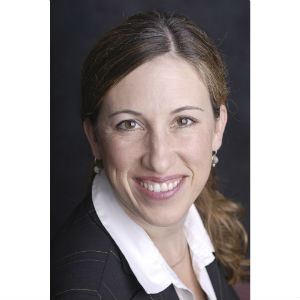
In this week’s Suter Science Seminar on the Eastern Mennonite University campus, professor Lisa Schirch connected two related issues that are central to the university’s educational mission and values: peacebuilding and sustainability. A research professor at EMU’s Center for Justice and Peacebuilding, Schirch also serves as director of human security at the Washington, DC-based Alliance for Peacebuilding, which works to advance sustainable peace around the world.
Schirch’s perspective on climate change and global stability is bolstered by her wide travels; she has conducted conflict assessments and participated in peacebuilding planning alongside local colleagues in over 20 countries including Afghanistan, Pakistan, Iraq, Sri Lanka, Indonesia, Kenya, Ghana, and Fiji. She earned a PhD in conflict analysis and resolution from George Mason University and is the author of a number of books and other publications.
After briefly explaining the science of global warming, Schirch focused on its political and social effects, rather than arguing for its existence. While much of the American public has varying responses and opinions to the concept of climate change, the view that global climate change is happening is uncontested in the Pentagon, as well as among the majority of the scientific community, she said.
The human response to climate change can be dramatic, Schirch said. When drought caused by global warming mixes with corrupt governments and religious extremism, terrorism can result.
In fact, retired naval commander Admiral T. Joseph Lopez, has argued that the conditions caused by global climate change will “extend the war on terror.” Lopez was among 11 retired military leaders contributing to a 2007 report, “National Security and the Threat of Climate Change.” Their findings and recommendations to the Department of Defense acknowledge the serious implications of political and social instability caused by the effects of climate change, Schirch said. (Schirch also referenced a 2014 report, “National Security and the Accelerating Risks of Climate Change,” in which an expanded advisory board of 16 military leaders echoed the earlier findings.)
North Americans may be less aware of the implications of climate change, Schirch said, because “we actually are living in one of the most climate stable regions of the world.” Nations in the northern part of the globe are less affected by climate change. Ironically, these are the nations that tend to be the worst polluters of the atmosphere.
“As the sea levels rise in the decades and centuries ahead, there will be inundation of coastal areas with loss of settled areas and agriculture land, threats to water, and spread of infectious disease will stress the region,” Schirch said. The result will be forced migrations out of the most affected regions as land becomes unlivable.
Some activists claim that “climate migrants should have the right to move to the countries from which all these bad greenhouse gasses are coming from,” she added.
Though climate change poses serious threats, Schirch concluded with some hopeful ideas. “Climate change is a source of conflict, but it also has potential to be a motivator for collaboration and peacebuilding,” she said. Climate change has potential to bring humanity together with one common goal. She added that the Mennonite tradition has always supported the goals of peace and creation care, even before climate change was a problem.
In a formal response after the seminar, biology professor Jim Yoder described global climate change as a “wicked” problem, a thorny and complex issue that cannot easily be pinned down or solved. Ray Gingerich, emeritus professor of theology and ethics, reminded the audience that both a top-down and bottom-up response are required.
Schirch’s lecture was part of EMU’s annual Suter Science Seminar Series, made possible by the Daniel B. Suter Endowment in Biology. Six seminars by experts in their field will take place this semester. Lectures are free and open to the public.
Article by Robert Propst




 Share
Share

AFP