Driving on an icy road sounds challenging, and it’s only worse when you actually get to do that. It’s definitely something that will be quite difficult to do right off the bat. But as you do it properly, you will be quite impressed with the way everything flows together. Now the question is, how can you stay safe while driving on these icy roads? Here’s what you need to know.
Prepare the vehicle for winter
Ideally, you always want to make sure that you have the vehicle ready beforehand. That means doing the important stuff like switching to winter tires if necessary, checking the tire tread and pressure often, testing the battery and replacing the wiper blades or topping off the washer fluid. You should also keep the fuel or charge level higher than normal.
On top of that, you should also consider getting a winter emergency kit, too. That should include an ice scraper, along with a snow brush, jumper cables, sand or traction mats for tire grip, a flashlight with extra batteries, blankets, non perishable snacks, and a phone charger. Basically, you want to have all the items you would need, just in case you are dealing with issues while driving during the winter.
Before you set out
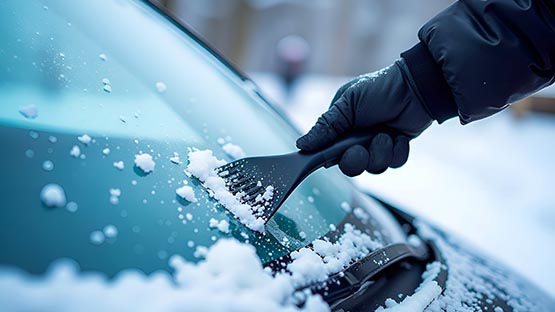
Eve before you go out, there are some things to focus on. First, you want to tell someone your route and arrival time, that way if you get stuck and can’t communicate, they will know how to follow you back and eventually find you. Let the engine and cabin warm up briefly as well, and clear all the ice/snow from the vehicle, where possible. Of course, before you go out, you want to check the road and weather conditions. Those can vary for a short drive or a long one, so that’s exactly what you need to consider.
Driving technique tips
The thing is, driving on icy roads requires quite a bit of attention and focus. But, if you do it right, the results can be pretty impressive. The idea here is to:
- Slow down before you need to, as slowing down is much harder on icy roads.
- Increase the following distance quite a bit, again, you want to stay safe.
- Avoid any sudden inputs. Due to the icy road, it still takes a while for those inputs to happen.
- Brake before turns and not during them.
- Learn how to identify black ice, which forms on overpasses and bridges.
- Use the lower gears on hills, where the vehicle actually allows you to do so.
- Keep your headlights on at all times, especially during the day, as that will help improve visibility to other drivers in the snow.
Even simple things like this can help make the driving experience better. Yes, it can have its challenges, but in the long term, it’s something that might actually help you. Being prepared and knowing how to tackle challenges on the road, that can make a major difference.
What if the vehicle starts to skid?
If you get injured, then talking with a car accident lawyer in Palm Beach Gardens is a very good idea. But if the vehicle is just skidding, you do want to stay off the brakes initially, and then steer into the skid. Avoid over-correcting, as it will push you into the wrong direction a lot of the time. And while there, you do want to ease off the accelerator, if you can.
In case the vehicle is stuck, then avoid spinning the wheels aggressively. Instead, try to use the traction aids and gently rock the vehicle if you can. While there, it also makes sense to clear snow from around the wheels and the vehicle’s underside. It’s going to help prevent any possible issues, while maintaining a high level of safety.
But what can you do if you become stranded? It does happen when you drive on these icy roads. The best approach is to stay with the vehicle and run the engine only intermittently for heat. Crack a window a little, so you can get ventilation and use the emergency kit, if you need it. Trying to get a hold of someone so they can come in and help, that’s important. In the meantime, try to make the vehicle visible on the road, for the same reasons.
Conclusion
It’s very difficult to drive on icy roads, hence the reason why you always want to be prepared for any issue that could possibly arise. Figuring out how to stay ready and tackle any challenges, that’s extremely important when you drive on these challenging roads. Yet at the same time, you also want to have an emergency kit and understand any possible issues that could arise. Being prepared and knowing how to handle any possible concerns, that will certainly be extremely useful. The last thing you want is to deal with unforeseen problems, after all.
This content is provided for informational purposes only and is not a substitute for professional advice. AFP editorial staff were not involved in the creation of this content.


 Share
Share