By Rahul Rana
The legalization of mobile sports wagering conditioned an entire generation of American consumers to expect instantaneous digital liquidity. Virginians fully embraced this reality back in January 2021, transforming their smartphones into highly regulated betting terminals. A resident can legally wager thousands of dollars on a Monday Night Football game from their couch in Augusta County. Try pulling a digital slot lever, however, and it remains a strict criminal offense. This jarring policy disconnect birthed the “border jumpers.”
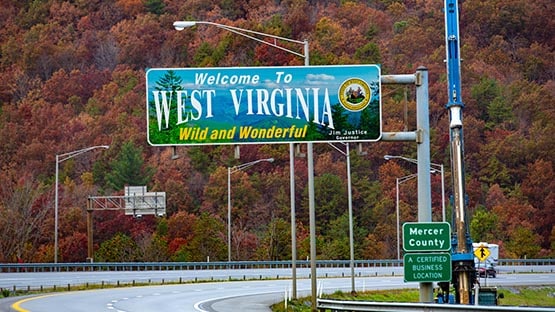
Shenandoah Valley locals are literally driving across the state line into West Virginia just to gamble. The catalyst for this localized migration actually began with a crackdown. County officials recently obliterated the neighborhood gray market by strictly enforcing bans on electronic skill games. Police handed down heavy fines to gas stations and dive bars, stripping away the region’s only immediate gambling outlet. Retirees and casual players living in western Virginia simply cannot justify a multi-hour drive to physical casino projects in Bristol or Danville. People still want to play. Now, they just take their bankrolls down the highway.
Richmond’s billion-dollar panic attack
Lawmakers desperately attempted to capture this bleeding capital during the chaotic 2026 General Assembly. Two aggressive pieces of legislation—Senate Bill 118 and House Bill 161—tried to tether online casino skins to the state’s five existing brick-and-mortar casinos. The bills crashed and burned in March inside a deadlocked conference committee.
This legislative collapse was not just about moral grandstanding. Conservative groups like the Family Foundation certainly made noise about the dangers of slot machines living in teenagers’ pockets. The real issue was financial cannibalization. The Joint Legislative Audit and Review Commission (JLARC) ran the numbers and absolutely terrified the political establishment. Their fiscal models projected that launching a legal iGaming sector could generate a staggering $3.56 billion in total revenue by 2031. The catch? It would simultaneously obliterate the state’s digital iLottery profits.
Analysts warned that iLottery revenues could plummet by up to 53 percent—a catastrophic $217 million drop—by fiscal year 2032. State law chains those lottery margins directly to the School Construction Fund. Try telling a local school board their budget is getting slashed just so adults can play virtual blackjack. That specific reality terrified Richmond. Up on Capitol Hill, lawmakers also cannibalized their own progress by arguing over taxes. Senate hardliners demanded a 20 percent cut. House delegates stubbornly dug in at 15 percent. Nobody moved an inch, and the entire framework collapsed into dust.
The semantic illusion of the sweepstakes casino
Let’s be real about what this legislative hesitation actually accomplished. Virginia effectively handed a massive monopoly to a completely unregulated shadow industry. Sweepstakes casinos thrive on brilliant, legally bulletproof semantic loopholes. Users on platforms like Funrize or McLuck never actually deposit cash to gamble. You purchase worthless virtual “Gold Coins” for recreational play. Operators then give you “Sweeps Coins” as a promotional bonus.
Players spin the exact same high-definition slots with these secondary coins. Users simply hoard these secondary tokens and swap them straight back to their bank accounts. Every single digital coin equals a hard U.S. dollar. Put a sweepstakes platform next to a fully regulated product on an iPhone screen, and I guarantee your average weekend bettor has zero clue which one holds a state license. This dual-currency model allows offshore operators to vacuum up Virginia entertainment dollars without undergoing background checks, enforcing strict responsible gaming limits, or paying a single dime in state privilege taxes.
The Mountaineer economic miracle
Take a short trip down Interstate 64 into the mountains of West Virginia, and the money trail takes a sharp turn. The Mountain State saw this exact trend coming years ago. Lawmakers out there aggressively switched on their own digital casinos long before the pandemic even hit. The state created a bulletproof regulatory framework requiring major digital operators—like DraftKings and BetMGM—to partner directly with their local brick-and-mortar properties.
The fiscal results are staggering. Between July 2025 and June 2026, West Virginia’s online casinos raked in $439.2 million in total revenue. This marked an absurd 42.7 percent year-over-year increase. The state takes a flat 15 percent cut of that action, meaning nearly $66 million flowed directly into the government’s coffers. West Virginia routes that windfall straight into pension plans, K-12 education, and veteran assistance programs. Virginia residents are routinely crossing the border to subsidize another state’s infrastructure. Every dollar wagered by a Virginian idling in a Charles Town parking lot is a dollar systematically robbed from Richmond.
Buffer zones and rest stop mathematics
This digital migration requires players to navigate highly aggressive compliance technology. Federal statutes like the Wire Act mandate that every single bet must originate physically within West Virginia’s sovereign borders. GeoComply handles this enforcement by drawing invisible digital “buffer zones” slightly inward from the actual geographic state line.
A player sitting at a border rest stop might still find their account locked if local Wi-Fi triangulation cannot guarantee they have cleared the buffer. Virginia players know they must drive deep enough into the territory to avoid a false positive. Any attempt to mask an Augusta County IP address using a Virtual Private Network (VPN) will trigger GeoGuard’s blocker instantly. The journey must be physical.
Look closer and you will realize why players bother with this logistical headache. The reality boils down to cold, hard mathematics. State-regulated operators in West Virginia utilize independent testing laboratories to rigorously audit their software. A veteran gambler crossing state lines is not playing blindly. They are hunting for optimal mathematical edges that sweepstakes sites simply refuse to publish. Savvy bettors routinely fire up the Mega Joker slot machine on regulated apps because its specific Supermeter mode offers a verified, theoretical 99 percent return to player.
You cannot find that kind of mathematical transparency on an opaque gray-market site. Players sitting at a maximum 10-coin bet push their base game winnings into an upper-tier reel system to hunt for massive Mystery Wins. For a heavy-volume bettor on a quick weekend trip, swapping an average 94 percent game for a 99 percent edge is the difference between bleeding cash and breaking even.
The cost of standing still
Prohibition in a hyper-connected digital economy is little more than a polite suggestion. Lawmakers in Virginia can continue to protect their iLottery margins, cite addiction metrics on the Senate floor, and block legislative expansion. Their stubbornness does absolutely nothing to alter consumer behavior.
The Commonwealth is currently trapped in the worst possible economic scenario. Virginians are actively gambling online through legally ambiguous sweepstakes loops or crossing state lines to enrich a direct economic rival. The capital is already leaving the ecosystem. The only remaining question is how many hundreds of millions in tax revenue Richmond is willing to forfeit before they finally decide to build a toll booth.
This content is provided for informational purposes only and is not a substitute for professional advice. AFP editorial staff were not involved in the creation of this content.




 Share
Share