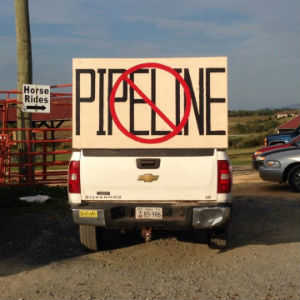
New challenge to Atlantic Coast Pipeline, fracked gas power plant

 Share
Share
A new challenge from conservation groups to a gas power plant presents another potential roadblock for the proposed Atlantic Coast Pipeline.
 Share
Share
A new challenge from conservation groups to a gas power plant presents another potential roadblock for the proposed Atlantic Coast Pipeline.

 Share
Share
Governor Terry McAuliffe has presented a letter to General Assembly money committee chairmen and the budget conferees.
 Share
Share
Augusta County Library will host Spectacular Spectroscopy, a series on hands-on STEM classes for children grades K to 5 on Mondays, February 1 through March 7.
 Share
Share
Virginia Conservation Network held its annual General Assembly Preview, a one-stop–shop for all environmental issues in Virginia’s 2016 General Assembly.
 Share
Share
Virginia is gearing up to play a major role in U.S. progress to address climate change, a new report said today. In the next decade, the state will cut as much global warming pollution as 22 billion tons of coal burned annually.
 Share
Share
Based on past plans filed by the power companies, Virginia is already 79% of the way to meeting its Clean Power Plan target for 2030. Conservation groups are calling on the power companies to address the three issues in the Integrated Resource Plans.
Share
Key pieces of Governor Terry McAuliffe’s 2015 New Virginia Economy legislative agenda are among the nearly 800 pieces of legislation that take effect today.
Share
The Waynesboro Public Library has a busy month of June planned.
Share
510nano Incorporated, a developer of renewable energy projects and technologies, will invest $11 million to relocate its headquarters and establish a manufacturing operation in Greensville County.

 Share
Share
Under a bill passed by the General Assembly in the 2015 session and signed by the Governor, the cost of electricity in Virginia will go down next month, and the base rate of electricity will be frozen for the next five years.


We don’t take press releases or official statements as the final word. Digging in to get the whole story takes time and resources.