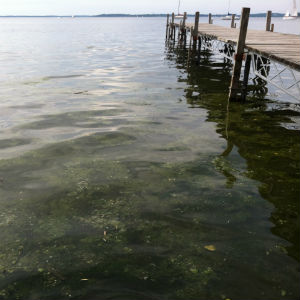
Virginia Tech researchers will examine the linkages between humans and freshwater quality

 Share
Share
Understanding human interactions with the natural environment can enhance the protection of surface water quality in lakes and streams.
 Share
Share
Understanding human interactions with the natural environment can enhance the protection of surface water quality in lakes and streams.
 Share
Share
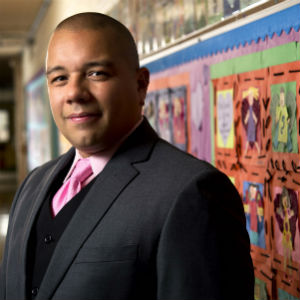
The Institute for Society, Culture and Environment at Virginia Tech has named Anthony Peguero, a professor of sociology, as its spring 2016 senior fellow.
 Share
Share
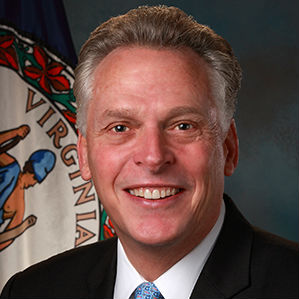
Governor Terry McAuliffe announced today that the Fiscal Year 2017-2018 budget he will introduce on December 17 will include a $2.43 billion bond package.
 Share
Share
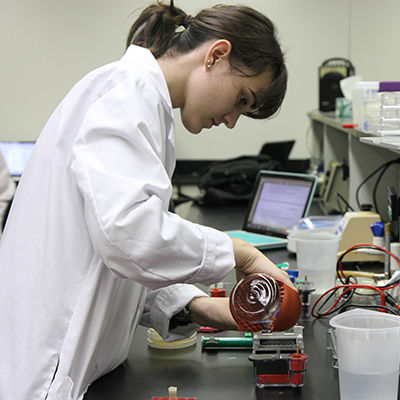
Virginia Tech faculty members in the department of biological sciences have created a course that provides scientific research opportunities for undergrads.
 Share
Share
“Parchment” – it sounds ancient and quaint. One variety of it – used in the first truly portable Bibles – has the disturbing name “uterine vellum,” prompting scholars over the centuries to surmise its origins.
 Share
Share
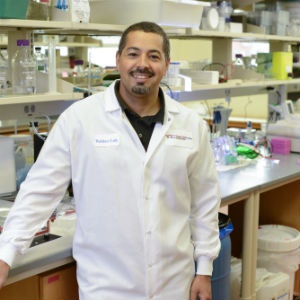
The same nerves that keep a person from crushing a flower or dropping a water glass are teaching scientists something new about amyotrophic lateral sclerosis.
 Share
Share
Mariana Falconier, associate professor and clinical director of Virginia Tech’s Center for Family Services at the Northern Virginia Center in Falls Church, has won a grant totaling $7.2 million for a five-year project to promote healthy relationships and economic stability among low-income couples.
 Share
Share
EMU alumnus Thaddeus May returns to campus Monday, Nov. 23, to present a Suter Science Seminar about research on childhood nutrition and an especially lethal variant of protein energy malnutrition called kwashiorkor. The event will be at 4 p.m. in Suter Science Center 106.
 Share
Share
Michael A. Anderson, the Robert E. Sadler Professor of Economics at Washington and Lee University, and Martin H. Davies, assistant professor of economics, have been awarded a United States International Trade Commission (USITC) government research contract for work on the organization’s India Trade Project.
 Share
Share
Can text messages help assuage the phenomenon of “summer melt,” when students, mostly lower on the socio-economic spectrum, fail to enroll in college even after they have been accepted?


We don’t take press releases or official statements as the final word. Digging in to get the whole story takes time and resources.