Farmers at risk for skin cancer; need to prevent sun damage
Extended amounts of sun exposure can increase the risk of developing skin cancer, especially for those who regularly work outdoors.

Extended amounts of sun exposure can increase the risk of developing skin cancer, especially for those who regularly work outdoors.

Scientists at the Virginia Tech Carilion Research Institute have added a new dimension to the understanding of how cells alter their communication with one another during development, wound healing, and the spread of cancer.

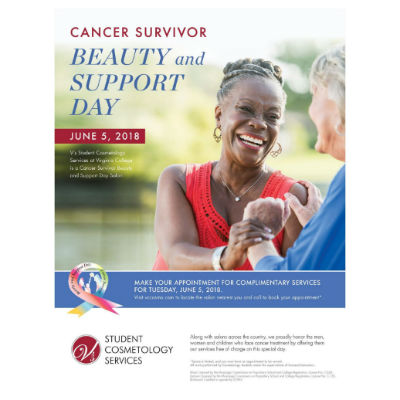
Students from V’s Student Cosmetology Services at Virginia College in Richmond are finding ways to use their gifts and talents to make a difference in honor of those affected by cancer.

The Cartledge Charitable Foundation Inc. has joined the fight against breast cancer with a $100,000 gift to the Virginia Tech Carilion Research Institute.

A scientist at the University of Virginia School of Medicine, working with local biotech company HemoShear Therapeutics, has created a three-dimensional model of a cancer tumor.

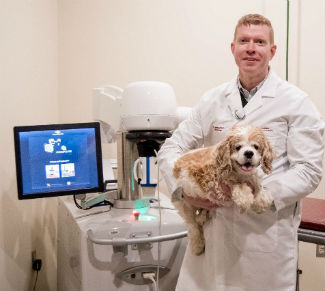
When Kitty Smith, of Christiansburg, Virginia, learned her 9-year-old cocker spaniel, Maddi Lynn Grace, had been diagnosed with a soft tissue sarcoma on her left front leg earlier this year, she knew right away that she would take her beloved companion to the Virginia-Maryland College of Veterinary Medicine.

Similar to many other students, Isabelle Stern and Ashley Cooper are looking forward to summer break; however, theirs will be far from ordinary. The friends are in the process of training for a 49-day, 4,000-mile run from San Francisco to Baltimore with more than 20 other college-aged students.

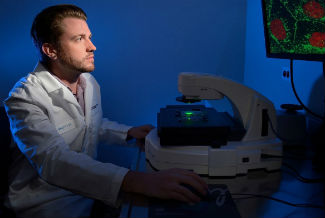
Using a homemade, high-tech microscope, scientists at the University of Virginia School of Medicine have revealed how a cancer-causing virus anchors itself to our DNA.

A University of Virginia School of Medicine researcher’s pioneering work in childhood cancer has been honored as one of the top 10 clinical research achievements of 2017.

New research from Virginia Tech is moving physicians closer to pinpointing a predictor of ovarian cancer, which could lead to earlier diagnosis of what is known as the “silent killer.”
Our content is free to read, but we do have bills to pay. Pitch in and help us keep the community informed.