Researchers from the Department of Biological Sciences in the College of Science received a $2.9 million award from the National Science Foundation (NSF) and the National Natural Science Foundation of China (NSFC) to understand the long-term host and pathogen dynamics of white-nose syndrome in bats. If all goes according to plan, their research will provide implications for other diseases as well.
Kate Langwig, an assistant professor, and Joseph Hoyt, a research scientist, are combining their respective specialties in infectious disease ecology with a focus on past and present disease patterns to find out how some hosts and pathogens can coexist, particularly after a host has already seen a massive decline from disease.
Langwig and Hoyt are collaborating with Chinese researchers to examine how the pathogen that is responsible for white-nose syndrome has affected bats across both time and space, and whether there are similar or different mechanisms that bats use to survive with this deadly disease.
White-nose syndrome is a fungal disease that spreads in the winter and causes lesions in the wings of bats during hibernation, setting off a cascade of physiological consequences that eventually lead to death. Since 2005, the fungus that causes white-nose syndrome, Pseudogymnoascus destructans, has killed millions of bats, causing bat population declines of 70 to 100 percent across multiple bat species in eastern North America.
However, researchers have noticed that, of the few remaining populations, some bats are less affected by the devastation, and they want to know why.
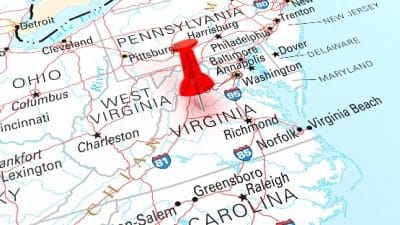
“Some of the major questions that we are trying to understand are ‘Is it the bats that are special? Or is it the environment that they inhabit? Or is it some combination of the two?’ If it is the bats that are special, it means that you could take individuals from these surviving populations and repopulate areas like Virginia, which has been really hard hit by white-nose syndrome,” said Langwig, who is also an affiliated faculty member of the Global Change Center.
Hoyt’s previous research has provided evidence that the fungus likely emerged in Eastern Asia tens of thousands of years ago and then spread to Europe thousands of years ago. It was likely introduced to northeastern North America in 2005.
One of the novel components of their research is that they are focusing on bat populations in Eurasia, which have survived with white-nose syndrome for millennia, to make their predictions about coexistence and the survival of bat populations.
“We are not just looking in areas where the disease has already caused impacts in North America and trying to understand the process of coexistence in our bat populations here, but we are actually trying to look at an area where that coexistence has already been reached – in Europe and Asia,” said Hoyt. “Can we draw some inference from these long-term dynamics to understand what our bat populations will look like in the future?”
In order to fine-tune their predictions about the future of white-nose syndrome afflicted bats, Langwig is building a mathematical integral projection model, a hybrid between an individually based model and a population model, which will allow researchers to make better predictions about disease dynamics.
She hopes that her modeling framework, combined with the experimental, observational, and genomic components of the project, can be applied to understand how hosts and pathogens are coexisting in other disease systems.
Both Langwig and Hoyt say that a large component of the grant is to identify the long-term effects of this disease on different bat populations, and if what we are seeing now in North America are actually long-term or short-term adaptations that will change in the future.
“If we see that this fungus is impacting populations in Eurasia, then it’s probably something that North American bats are going to face for a long time,” said Langwig.
This grant is an example of history in the making. This grant was the first time that this joint NSF, NIH, and USDA program has collaborated with NSFC.
In addition to Hoyt and Langwig, who are both affiliated faculty members of the Fralin Life Sciences Institute, the co-principal investigators of this project include Jiang Feng and Keping Sun from Northeast Normal University in China, Jeff Foster from Northern Arizona University, and Beth Shapiro and A. Marm Kilpatrick from the University of California Santa Cruz.
Langwig and Hoyt were hired as part of the Global Systems Science Destination Area in the College of Science at Virginia Tech to address issues of infectious disease. The Global Systems Science Destination Area is focused on understanding and finding solutions to critical problems associated with human activity and environmental change that together affect diseases states, water quality, and food production.


 Share
Share

AFP