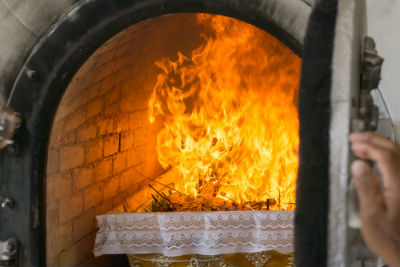
Since the beginning of human history, cremation — the burning of a human body after death — has been a standard method for treating the deceased across nearly all cultures. Cremation is space-efficient, clean, and it creates a tangible keepsake that can help people memorialize and remember their loved ones.
However, cremation isn’t without its problems. The process has a high carbon footprint, consuming quite a bit of energy and releasing damaging greenhouse gases into the environment. Plus, other toxic compounds, such as dioxins, furans, and mercury can be vaporized and released into the air with the rest of the cremation exhaust.
Alkaline hydrolysis, known colloquially as “resomation”, or water cremation, has been developed as an eco-friendlier alternative to flame cremation. When you purchase cremation Urns for human ashes, you can now have them filled with ashes that are generated without burning the body. This process uses a quarter of the energy, produces fewer greenhouse emissions, and keeps any mercury content safely contained.
How Does Alkaline Hydrolysis Work?
Instead of using fire, alkaline hydrolysis utilizes a strong base solution to break down the soft tissues of the body. The process is referred to as water cremation because the body is placed in a tank filled with water and potassium hydroxide, commonly known as lye.
This mixture and the body contained within is then heated, usually to around 160 °C (320 °F), and placed under pressure to prevent boiling. The heat and pressure accelerate the natural decomposition process created by the caustic lye/water mixture. An average human body can be fully reduced in four to six hours.
At the conclusion of the process, the body’s soft tissues will have fully dissolved into the water/lye mixture, which can be pumped away, leaving the bones. These will be extremely brittle and can be easily pulverized into powder to create the ashes we expect to receive from a standard flame cremation.
It’s important to note that these “ashes” are the same product created by flame cremation. The fire is hot enough to vaporize soft tissues entirely, so all that remains are bone fragments, which are then crushed and delivered as ashes.
How Water Cremation is Better for the Environment
By its nature, combustion is problematic for the environment. Because water cremation doesn’t require fire, there’s no exhaust and no direct greenhouse emissions.
The electricity required to heat the lye solution and maintain the necessary temperature is considerably less energy than is needed to sustain the 430°C (800 °F) temperatures used in flame cremation.
Even the caustic water/lye solution is rendered safe by this process. Liquefying the fats and other solids from the body slowly reduces the pH of the solution. Water can be added at the end to bring the pH into a safe range. The simple organic compounds contained in this final mixture are safe enough to be used as a fertilizer in agriculture.
Alkaline Hydrolysis is a Respectful Alternative to Burial and Standard Cremation
The process may sound gruesome, but in many ways, water cremation is far gentler than standard cremation. It is certainly less violent, it mimics the natural process of decomposition, and it doesn’t release harmful emissions, which means you could consider it more respectful to the deceased and to the planet.
If you’re considering burial options and want a process that can fill cremation urns for human ashes to distribute to loved ones, check to see if the process is legal in your area (acceptance is growing every year) and talk with a funeral professional about your options. Alkaline hydrolysis might be precisely what you’re looking for.
Uday Tank has been working with writing challenged clients for several years. His educational background in family science and journalism has given him a broad base from which to approach many topics. He especially enjoys writing content after researching and analyzing different resources whether they are books, articles or online stuff.


 Share
Share
AFP