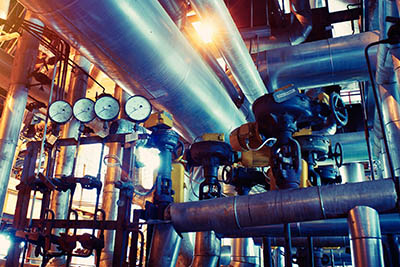
Control systems play a major role in how industrial operations manage costs and long-term performance. By regulating important variables like flow rates, pressure, temperature, and inputs, the right systems stabilize processes while minimizing waste. Over time, a well-designed control system can positively impact every aspect of operations, including maintenance schedules and even energy consumption. Companies that prioritize control systems are better able to control costs, avoid unplanned disruptions, and maintain long-term reliability.
Precision process control saves big money
Process control provides serious leverage for tightening cost leaks. By controlling key variables like flow rate and chemical dosage within narrow bands, control systems ensure precision that reduces waste and extends equipment life. For example, capillary chemical injection systems inject a chemical into the production stream at a consistent, controlled rate, which minimizes waste. Once configured, a capillary injection system is mostly hands-off, saving labor and other operational costs.
Automation and workforce efficiency
Investing in automation seems like an upfront cost but the long-term savings can be massive. First, automated control systems reduce the need for repetitive tasks that humans need to perform. This frees up employees for more important work and decreases labor costs.
Automated machines and controls operate continuously. Since they don’t need breaks, downtime decreases and throughput increases. There’s also less chance for errors since manual tasks are prone to waste, rework, and safety incidents. Automated controls execute their programmed instructions consistently. Over time, all improvements afforded by automation compound and lead to ongoing reduced costs.
Real-time monitoring
Unlike legacy systems that require waiting for an error to surface, modern control systems can see ahead and respond to issues before they become costly problems. Real-time data fed through dashboards provides operators with the information they need to understand conditions instantly. Rather than reacting to failure, control systems can trigger maintenance when conditions are just starting to drift toward risk.
Monitoring for long-term patterns can reveal inefficiencies that can be corrected before they cause problems, saving money across multiple cycles. When guesswork is reduced, operations run smoother and they’re less costly to run.
Quality assurance reduces rework and waste
Quality is crucial and control systems are the first line of defense against inconsistency and wasted materials. With consistent conditions, there are fewer defects and rejects.
Modern control systems continuously monitor processes through sensors and feedback loops. When sensors detect a deviation, the system will correct the parameters to prevent off-spec products that will need to be reworked or scrapped. It’s cheaper to prevent defects at the source rather than correct them after production.
With fewer quality issues, customers are happier and make fewer returns and warranty claims. In manufacturing, consistency and predictability translate directly to big savings.
Resource optimization
Industrial processes consume massive amounts of energy, raw materials, and other consumables, which makes resource efficiency a direct driver of operating costs. Control systems optimize this usage by continuously adjusting process parameters to meet actual demand, which lowers operational costs.
For example, variable speed drives and control loops reduce excess energy draw when it’s not needed, and that can cut power usage significantly. According to the Energy Institute, using variable speed drives to control motor systems can save around 15%-40% of energy used. Control systems can also provide accurate dosing, which reduces waste and disposal expenses.
Predictive maintenance
One of the biggest benefits of a good control system is knowing before something breaks. When predictive maintenance strategies are tied into control data, emergency repairs are minimized. This leads to longer equipment life, less downtime, and lowers the risk of penalties for non-compliance.
Scalability and future-proofing
Investing in modern control systems will pay off as systems grow. Integrated control platforms can scale easily without the need to start over. A consistent control environment is much easier to scale, especially when it’s built with future upgrades in mind. In this case, it’s easy to add new sensors, AI, and analytics with minimal disruption and cost.
Control systems play a central role in cost savings
At a fundamental level, control systems influence how efficiently resources are used and how consistently operations perform. By regulating key process variables, they can prevent waste, limit unnecessary energy consumption, and avoid costly disruptions. Whether it’s applied to production control, equipment monitoring, or maintenance planning, a well-designed control system improves reliability and makes operating costs more predictable.
The cost savings also extend beyond individual processes. Any industry that relies on automation and precision benefits from control systems that support better planning, longer equipment life, and fewer unplanned breakdowns. As a result, capital that would otherwise be absorbed by inefficiencies and emergency repairs can be invested in growth and optimization. Long-term control systems are strategic assets that deliver measurable savings year after year.
Support AFP



 Share
Share