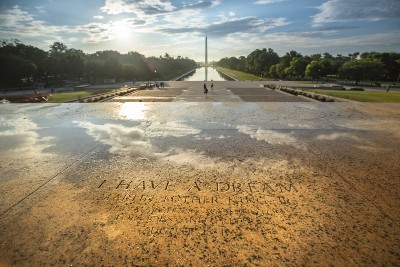
The Martin Luther King Jr. that most of us know gave a speech about having a dream, then was assassinated in Memphis.
There were actually five years in between the two, and what he did during that time needs to be remembered as much as his dream, probably more.
King, after the “I Have a Dream” speech in 1963, the passage of the Civil Rights Act in 1964 and the Voting Rights Act in 1965, began to challenge President Johnson on Vietnam, identifying the war as an offshoot of the three “triple evils” in American society – racism, poverty and militarism – and the criticism broke their relationship, the two not on speaking terms in the last year of King’s life.
By that point, King was leading an effort, the Poor People’s Campaign, pushing economic justice for blacks, poor whites, people from all backgrounds, regardless of race, the centerpiece of the campaign being an Economic Bill of Rights that included a commitment to full employment, a guaranteed annual income measure and the annual construction of 500,000 affordable residences.
King’s reputation for some is one of concession – his commitment to nonviolent protest can come across to some in our day as asking for something.
The approach that began early in the civil rights movement in the 1950s with the bus boycott in Montgomery through the marches in various Southern cities and towns all the way through to the Poor People’s Campaign was anything but just asking for something.
King had a sense of PR and marketing that rivaled or surpassed that of the best from Madison Avenue or the kingmakers in D.C.
The high-pressure water hoses and police dogs, the snarling hatred demonstrated toward people peacefully protesting for basic equal treatment, all played out in front of TV and newspaper cameras, as King and his inner circle had planned, and the accumulation of those images changed public opinion to the degree that it forced the hand of Congress to intervene.
The idea behind the Poor People’s Campaign was to take those scenes from the South to the streets of the nation’s capital, prompting planning from the federal government to plan a possible military response, and J. Edgar Hoover’s FBI working to undermine the campaign with a calculated misinformation effort labeling King as a communist and the Poor People’s Campaign as on the verge of bankruptcy.
The campaign fizzled out after King’s murder on April 4, 1968 in Memphis, and the Economic Bill of Rights never saw the light of day, though here we are, more than half a century later, still debating issues it highlighted – a living wage, affordable housing.
What happens if King isn’t felled by the assassin’s bullet?
The Civil Rights Act and the Voting Rights Act suggest that we’d at least have had some movement in the direction of the economic and racial justice aims laid out by the Poor People’s Campaign.
More than half a century later, we still can only dream of economic and racial justice.
The King that we memorialize today is sanitized to the point that all we think about is the dream.
Spend some time today honoring the dream, and remembering that there is still a lot of work done to bring that dream to reality.
Story by Chris Graham


 Share

Chris Graham